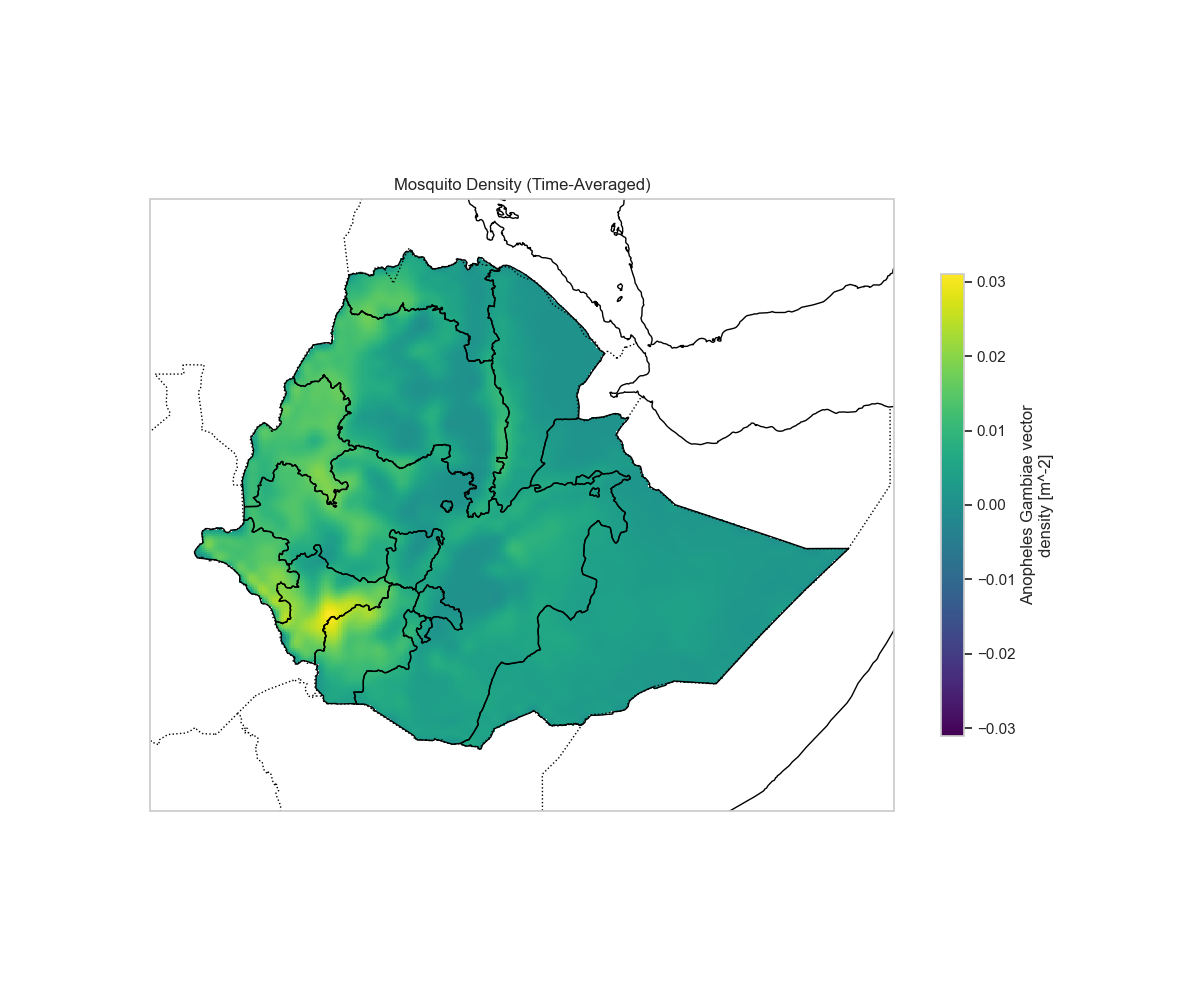
Spatial Patterns
Time-averaged mosquito density showing transmission hotspots
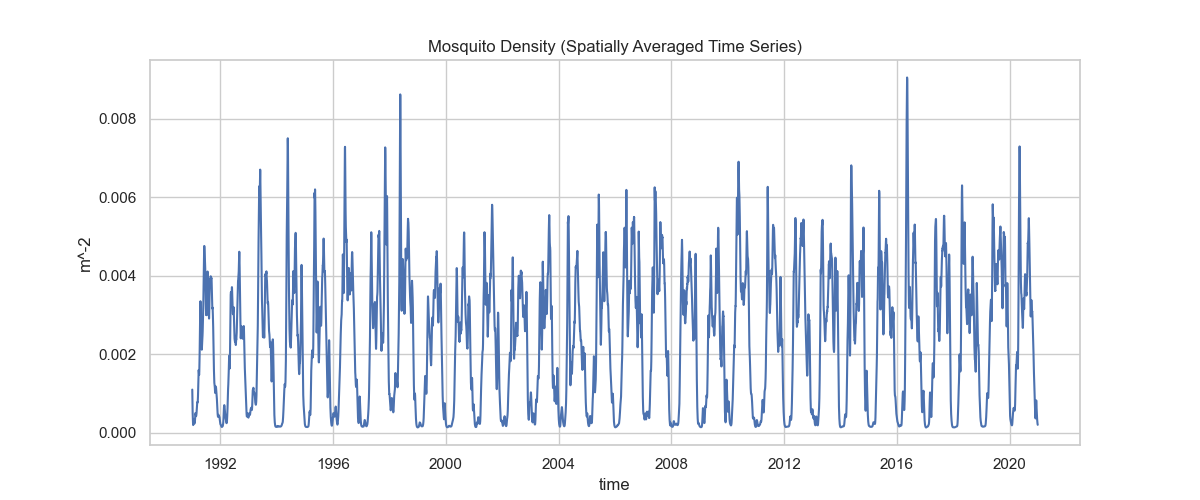
Temporal Dynamics
Seasonal cycles in vector populations over time
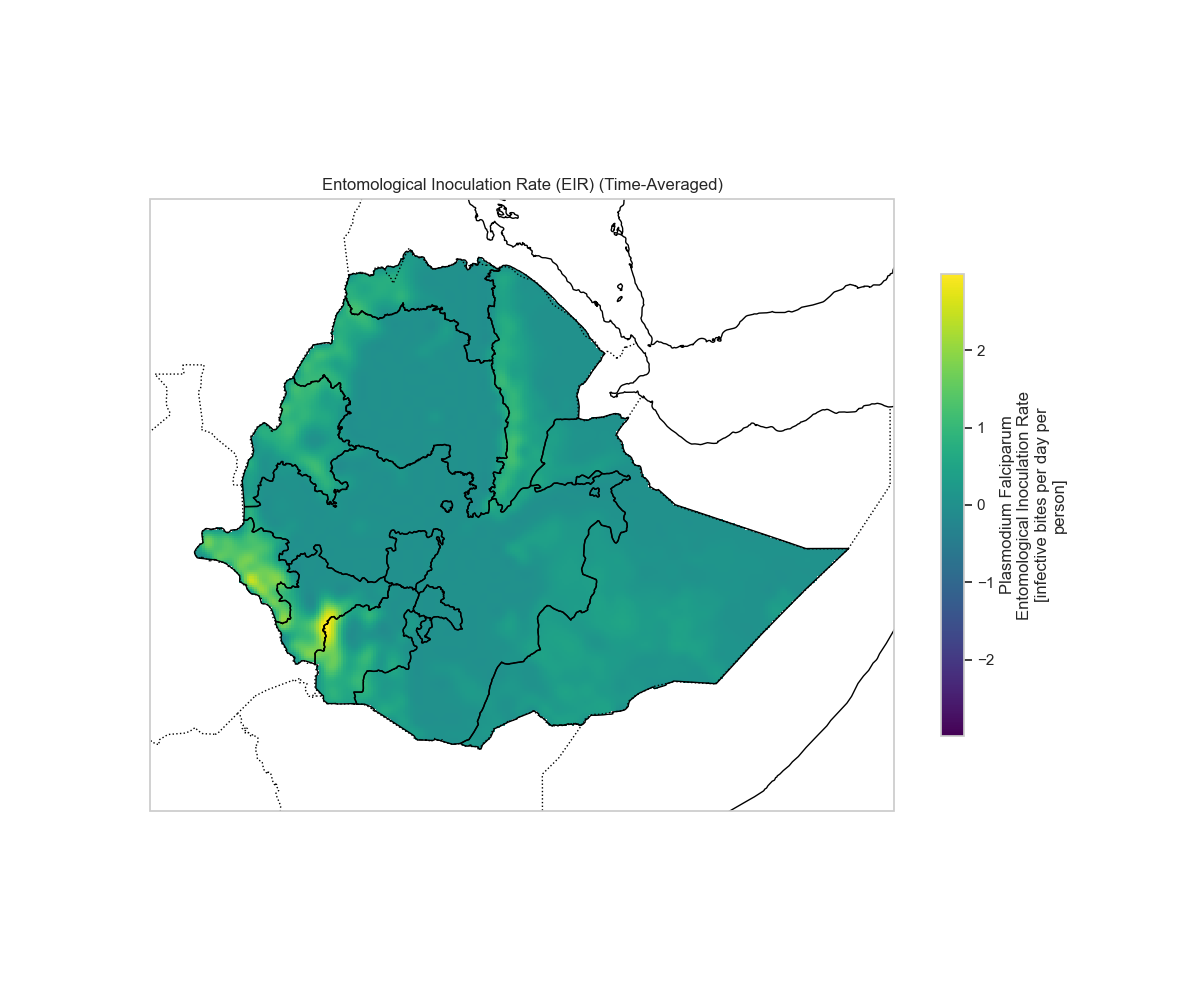
Disease Metrics
Entomological Inoculation Rate (EIR) distribution
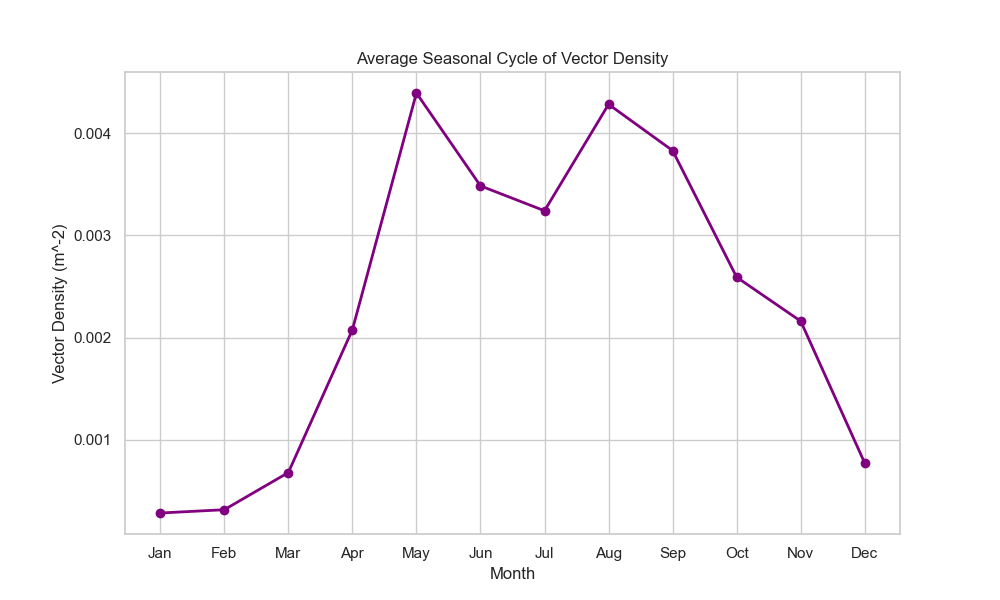
Seasonal Analysis
Average seasonal cycle of vector density
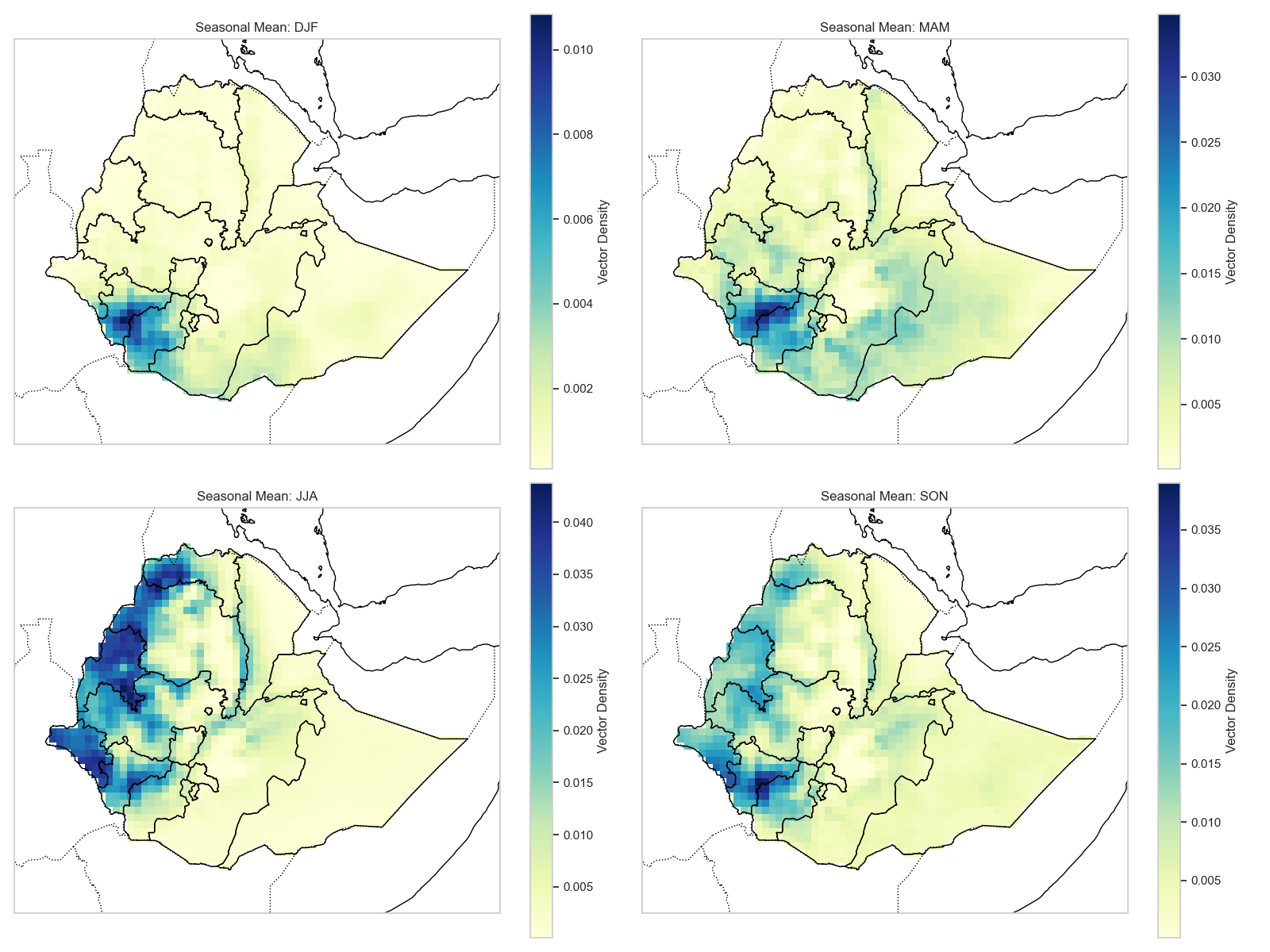
Seasonal Maps
Transmission patterns across different seasons
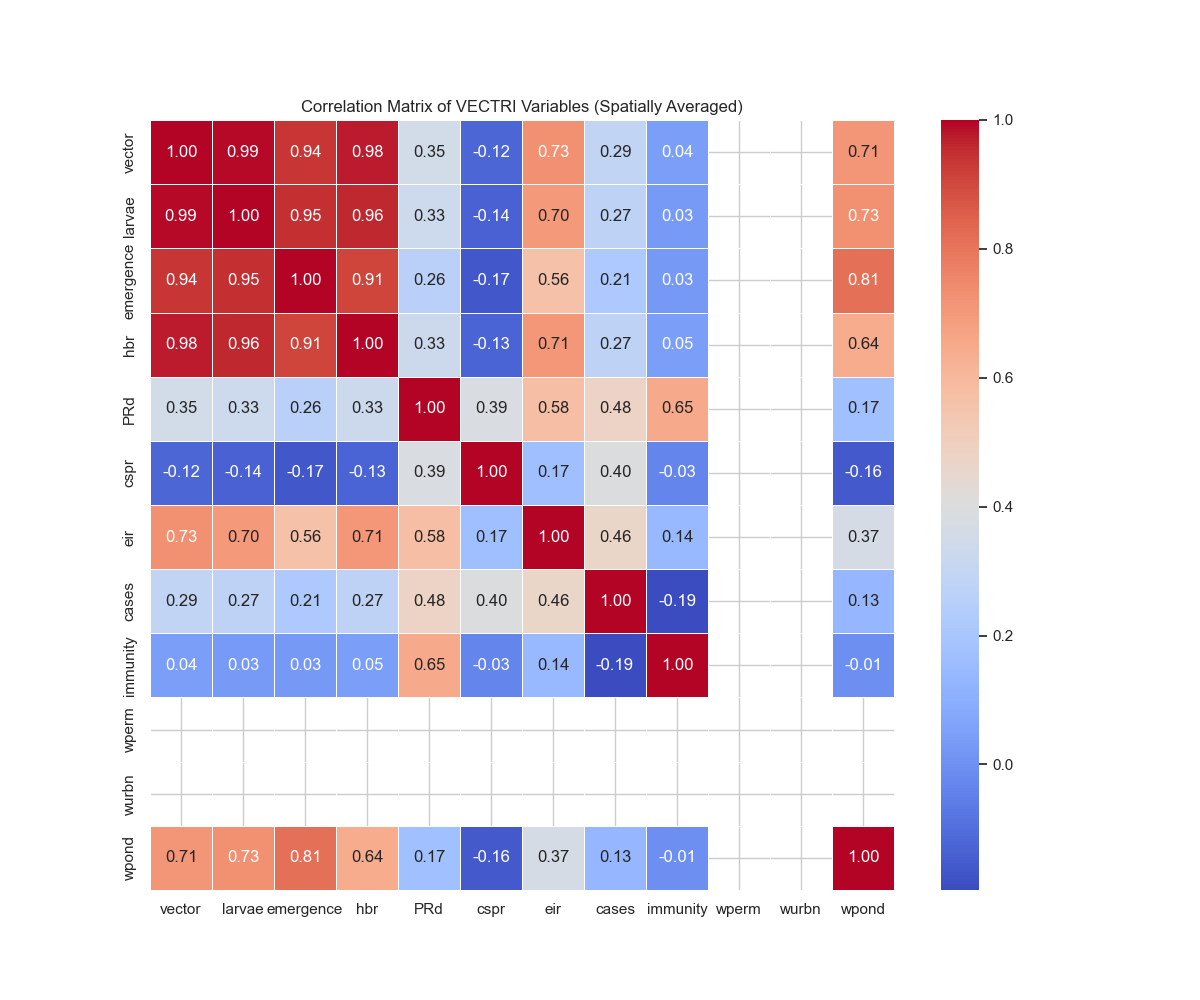
Variable Relationships
Correlations between key VECTRI variables
Overview
This training is designed to support participants from the Ethiopian Meteorological Institute (EMI) in strengthening technical capacity to build and operate a fully automated, end-to-end seasonal malaria outlook system using observational climate data pipelines, C3S multi-model seasonal forecasts, bias correction, probability estimation, VECTRI malaria modeling, and operational bulletin and dashboard production—to enhance malaria early warning systems and support evidence-based public health interventions in Ethiopia.
In particular, this training is prepared in collaboration between the Swedish Meteorological and Hydrological Institute (SMHI), International Livestock Research Institute (ILRI), and Lersha to support EMI staff. This training is financed by the Swedish International Development Cooperation Agency (Sida) as part of the Water and Climate Change Services for Africa, Ethiopia (WACCA-E), phase 2 project.
Hands-on work uses an Ethiopia target grid and exercises aligned to the Belg (MAM) and Kiremt (JJAS) seasons.
Finding Day 6 — Observational pipeline lessons
The site uses tabs at the top. Open the Lessons tab, then expand Day 6 - Observational pipeline in the left sidebar to see all steps (overview, CHIRPS download, QC, grid/mask, standardization, documentation). You can also go straight to the Day 6 overview.
Workshop Details
| Dates | Monday–Friday, April 20–24, 2026 |
| Time | 09:00–17:00 daily (UTC+03:00, Addis Ababa) |
| Duration | 5 days |
| Format | In-person (lectures, practical exercises, and discussions) |
| Participants | 10–15 participants |
| Venue | Elilly Hotel, Addis Ababa, Ethiopia |
Target Audience
Technical staff from EMI, regional meteorological offices, and partner institutions (10–15 participants).
Expected Workshop Outputs
By the end of the week, participants and teams will have produced:
- A cleaned observational Ethiopia climate pipeline using CHIRPS rainfall and observational temperature data.
- A CHIRPS-aligned Ethiopia target grid, land mask, and historical split definition.
- A February-initialized MAM / Belg seasonal workflow and an April-initialized JJAS / Kiremt seasonal workflow.
- Hindcast verification, bias-correction diagnostics, and probability products.
- VECTRI-ready climate inputs and prototype forecast-driven malaria outlook products for 2026.
- An automated processing script, bulletin-ready outputs, and a draft dashboard concept.
Daily overview
| Day | Theme | Main focus |
|---|---|---|
| Day 1 | Foundations and observational baseline | Climate–malaria context, observational pipeline, Ethiopia target grid and mask, baseline VECTRI inputs. |
| Day 2 | Exercise 1: February init → MAM / Belg | C3S data access, preprocessing, regridding, Belg aggregation, hindcast verification. |
| Day 3 | Calibration and Exercise 2: April init → JJAS | Daily quantile mapping, probability estimation, April-initialized workflow, JJAS ensemble products. |
| Day 4 | VECTRI integration and forecast-driven outlooks | VECTRI forecast inputs, seasonal experiments, output interpretation, validation. |
| Day 5 | Operationalization, automation, deployment | Automated processing, bulletin products, dashboarding, versioning, operational roadmap. |
Seasonal exercises (core)
- Exercise 1: February initialization → MAM / Belg climate outlook.
- Exercise 2: April initialization → JJAS / Kiremt climate outlook.
Detailed agenda
Day 1 — Foundations, data architecture, and observational baseline
Theme: Building the Ethiopia observational climate pipeline and VECTRI baseline.
Objective: Establish the climate–health context, define the Ethiopia target grid and mask, and build the baseline observational pipeline that will support calibration, validation, and VECTRI forcing.
| Session | Objective | Practical | Expected output |
|---|---|---|---|
| Data architecture for seasonal malaria outlooks | Present the end-to-end system architecture from observations to products. | Draw the system workflow as a pipeline. | System architecture diagram. |
| CHIRPS rainfall and observational temperature data access | Set up the observational datasets for Ethiopia. | Download sample rainfall and temperature files for Ethiopia. | Organized raw observational data archive. |
| Daily ingestion, preprocessing, QC, and diagnostic plots | Build a trusted observational dataset before any forecast calibration. | Generate QC plots: time-series checks, annual cycle plots, rainfall histograms, missing-data diagnostics, daily map previews. | QC report and diagnostic plot set. |
| Ethiopia target grid, CHIRPS-aligned mask, and data split | Define the common grid used throughout the training and split the historical period. | Create target grid, mask, and split configuration files. | Ethiopia target grid, mask, and split-ready dataset definition. |
| Preparing climate inputs for VECTRI using observations | Convert preprocessed observed rainfall and temperature into VECTRI-ready inputs. | Prepare one VECTRI-ready observational input example. | Baseline VECTRI forcing file from observations. |
Day 2 — Exercise 1: February initialization to MAM / Belg outlook
Theme: Seasonal forecast setup and advanced modeling for Belg.
Objective: Introduce the C3S daily multi-model seasonal systems and build the first Ethiopia seasonal workflow using February initialization for MAM / Belg.
| Session | Objective | Practical | Expected output |
|---|---|---|---|
| Introduction to C3S daily multi-model seasonal forecast products | Understand the seasonal systems and their structure before downloading. | Inspect product metadata and variable structure. | Model inventory sheet. |
| Downloading February-init C3S seasonal forecast data | Build a reproducible forecast download workflow for Belg. | Download sample February-initialized rainfall and temperature data. | February-initialized seasonal archive for Ethiopia processing. |
| Daily ingestion, unit conversion, and cumulative precipitation handling | Standardize seasonal forecast files for downstream use. | Convert raw model precipitation accumulations into daily totals. | Clean daily February-init forecast files. |
| Regridding to the CHIRPS-aligned target grid and masking | Bring all seasonal systems onto the same Ethiopia target grid. | Regrid one model to the common Ethiopia target grid and apply the mask. | Regridded and masked February-init forecast dataset. |
| Seasonal aggregation and Belg climate diagnostics | Generate Belg-relevant climate outlook variables from daily data. | Build MAM maps for rainfall and temperature. | Belg rainfall and temperature outlook maps. |
| Hindcast verification for Belg | Evaluate the Belg seasonal models against observations. | Compute basic skill metrics and maps. | Hindcast verification summary for Belg. |
Day 3 — Calibration, probabilities, and Exercise 2: April initialization to JJAS
Theme: Calibration, probabilities, and the Kiremt seasonal outlook.
Objective: Complete the calibration workflow for seasonal forecasts and build the second exercise using April initialization for JJAS / Kiremt.
| Session | Objective | Practical | Expected output |
|---|---|---|---|
| Member-wise daily quantile mapping bias correction | Correct systematic model biases before product generation or VECTRI forcing. | Run daily quantile mapping on one model and compare before/after distributions. | Bias-corrected seasonal members. |
| Bias-correction diagnostics | Verify that the correction improved the forecast climate distributions. | Produce a compact diagnostic panel for one location and a regional mean. | Bias-correction diagnostic figure set. |
| Probability estimation, correction, and tercile boundary estimation | Move from deterministic climate fields to probabilistic seasonal outlooks. | Generate tercile boundaries, below/normal/above probabilities, and reliability diagnostics. | Probability products and diagnostic plots. |
| Exercise 2 setup: April initialization for JJAS / Kiremt | Apply the same workflow to Ethiopia’s main rainy season. | Configure the April-init workflow. | April-init processing notebook and config. |
| Downloading and preprocessing April-init data | Build the JJAS seasonal forecast archive for Ethiopia. | Process one April-init model end to end. | Regridded and aggregated April-init dataset. |
| Multi-model ensemble development for JJAS | Build a robust ensemble product for operational use. | Combine multiple models into a draft JJAS climate outlook. | Multi-model JJAS seasonal outlook map set. |
Day 4 — VECTRI integration and forecast-driven malaria outlook development
Theme: From calibrated seasonal climate forecasts to malaria outlook products.
Objective: Prepare forecast-driven climate inputs for VECTRI, run seasonal malaria outlook experiments, and interpret the resulting outputs.
| Session | Objective | Practical | Expected output |
|---|---|---|---|
| Preparing seasonal forecast inputs for VECTRI | Turn calibrated rainfall and temperature fields into VECTRI-ready files. | Build a VECTRI forcing example from a corrected seasonal model output. | Forecast-based VECTRI input file. |
| Running VECTRI with seasonal model outputs | Demonstrate the forecast-to-VECTRI workflow. | Execute a sample VECTRI run. | Forecast-driven VECTRI simulation result. |
| VECTRI output interpretation | Learn how to interpret malaria-relevant model outputs for Ethiopia. | Examine VECTRI outputs and produce a short interpretation note. | Prototype VECTRI interpretation summary. |
| Out-of-sample validation | Validate the workflow on years not used for calibration. | Run a validation example and summarize findings. | Out-of-sample validation note. |
| Building 2026 operational forecast products | Produce a first operational-style malaria outlook package. | Build a draft 2026 seasonal malaria outlook package. | Prototype 2026 operational product set. |
Day 5 — Operationalization, automation, dashboards, and bulletin production
Theme: Turning the research workflow into an EMI operational system.
Objective: Automate the pipeline, package outputs for bulletin use, and define deployment options for dashboards and operational production.
| Session | Objective | Practical | Expected output |
|---|---|---|---|
| Automating the whole process | Build an end-to-end seasonal processing script. | Assemble the workflow into a scripted operational chain. | Automated seasonal processing script. |
| Prototype climate-to-VECTRI operational workflow | Connect all modules into one repeatable operational system. | Run the prototype chain with one sample case. | Prototype climate-to-VECTRI workflow. |
| Bulletin product generation | Turn technical outputs into EMI-ready communication products. | Draft a one-page seasonal malaria bulletin layout. | Bulletin-ready product template. |
| Dashboard development and deployment options | Design a practical dissemination layer for outlook products. | Build a simple dashboard mock-up or prototype page. | Draft dashboard structure. |
| Data management, versioning, and operational roadmap | Ensure that the system is reproducible and sustainable. | Create a minimal reproducibility and version-control checklist. | EMI operational roadmap and maintenance checklist. |
| Group presentations and closing | Consolidate learning and agree on next steps. | Group presentations of the observational pipeline, Belg exercise, JJAS exercise, and deployment concept. | Agreed next-step action points. |
Requirements
Prerequisites
- Intermediate Python scripting with Python 3.10+ (pandas, xarray, matplotlib, cartopy, rioxarray, cdsapi, netCDF)
- Basic NetCDF/GRIB handling and familiarity with climate data concepts
- Personal laptop (Linux preferred; Windows users should use WSL2 where needed)
- VECTRI (latest version from ICTP) and required dependencies
- Jupyter Notebook and/or VS Code
Software and tools
- Python 3.10+ (Jupyter and/or VS Code)
- VECTRI model (ICTP; compiled with required dependencies)
- Linux/Unix environment (native or WSL2)
- NetCDF utilities and climate data APIs as used in exercises (e.g. CDS)
Core datasets for seasonal exercises
- Observed rainfall: CHIRPS daily rainfall.
- Observed temperature: ERA5-Land or CHIRTS daily temperature.
- Seasonal forecasts: C3S daily multi-model seasonal forecast products from ECMWF, UK Met Office, Météo-France, DWD, CMCC, NCEP, ECCC, JMA, and BOM (see also C3S seasonal scripts and related lesson materials).
Additional reference datasets (site materials)
The lesson site also includes download helpers and documentation for many other products (ARC2, TAMSAT, GFS, HRES, S2S, CMIP6, WorldPop, HWSD, etc.)—use these as needed beyond the core seasonal outlook exercises.
Facilitators
Dr. Bode Gbobaniyi
Swedish Meteorological and Hydrological Institute (SMHI)
Dr. Teferi Demissie
International Livestock Research Institute (ILRI)
Yonas Mersha
International Livestock Research Institute (ILRI)
Interactive Learning with Binder
Experience hands-on learning with our interactive Jupyter notebooks! No installation required - just click and start coding.
 Launch Interactive Environment
 Includes all lessons, sample climate data, and pre-configured Python environment.
💡 What is Binder?
A free service that turns our GitHub repository into a live, interactive Jupyter environment. Perfect for following along with lessons or experimenting with code!
💬 Real-Time Collaboration
Join our dedicated real-time collaborative space for Q&A, notes, and discussions during training sessions:
For more collaboration options, visit our full collaboration guide.
Participants List
| No. | Name | Department/Desk | |
|---|---|---|---|
| 1 | Tarekgn Abera | ISOMS | tatarish59@gmail.com |
| 2 | Desalegn Tarekgn | Health Met | desalegntarekegn@gmail.com |
| 3 | Ayalew Tassew | HealthMet | ayalewtasew8@gmail.com |
| 4 | Tamirat Yohannes | Hydromet | yohannestamirat81@gmail.com |
| 5 | Alemu Gamini | Hydro met | alemugamini@gmail.com |
| 6 | Kidus Belay | Agromet | kibe_302001@yahoo.com |
| 7 | Yimer Assefa | Agromet | yimera649@gmail.com |
| 8 | Gebremariam Adane | Healthmet | gebremariamadane@gmail.com |
| 9 | Sintayhu Tewabe | Agomet | santazewdu18@gmail.com |
| 10 | Chaka Natai | Halthmet | chakanatae832@gmail.com |
| 11 | Rahele Yirdaw | MFEW | rahelyirdaw21@gmail.com |
Contact
For inquiries about this workshop, please contact:

Yonas Mersha
Hydro-Climate Modelling and AI Expert
International Livestock Research Institute (ILRI)